Introduction to 316 and 316L Stainless Metal
Stainless-steel is acknowledged throughout numerous industries for its distinctive corrosion resistance, sturdiness, and skill to take care of structural integrity in demanding environments. Amongst its many alloys, 316 and 316L chrome steel, out there at https://www.specialtysteel.com/, are two of probably the most broadly used, every that includes distinct properties that make them particularly suited to particular functions. When figuring out which grade to make use of, understanding the variations between them may help keep away from materials failures and guarantee long-term efficiency.
Each 316 and 316L belong to the austenitic household, which is prized for its non-magnetic properties and resistance to varied types of corrosion. Whereas their similarities foster some overlap in industrial utilization, the variations between these grades—particularly concerning composition and efficiency—are pivotal to materials choice.
The distinctions impression not solely the metal’s efficiency beneath mechanical and environmental stresses but in addition dictate the benefit of fabrication, suitability for welding, and compliance with regulatory necessities in sure sectors. Deciding on the precise sort comes all the way down to a detailed examination of the working setting, regulatory requirements, and anticipated working situations. Given the widespread utilization of those stainless steels, a deeper understanding of their variations may help purchasers, fabricators, and engineers make knowledgeable selections for each rapid and long-term necessities.
Chemical Composition Variations
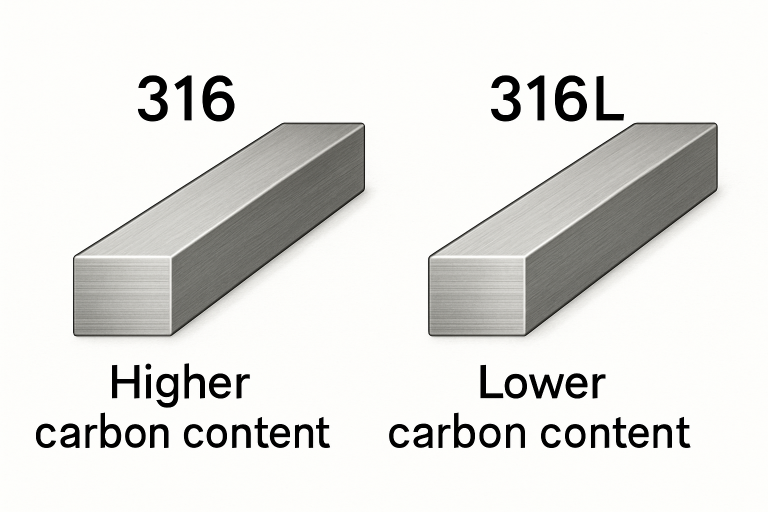
The defining distinction between 316 and 316L chrome steel is of their carbon content material. Carbon performs a vital function in figuring out hardness and machinability, however extreme quantities can compromise corrosion resistance throughout particular processes.
- 316 Stainless Metal: Accommodates as much as 0.08% carbon, together with roughly 16-18% chromium, 10-14% nickel, and 2-3% molybdenum. The presence of molybdenum additional enhances its resistance to chemical corrosion and pitting from chlorides.
- 316L Stainless Metal: Accommodates a most of 0.03% carbon. This minimal carbon reduces the danger of carbide precipitation throughout welding, thus preventing chromium depletion and sustaining optimum corrosion resistance round welds.
This refined distinction in carbon makes 316L higher suited to essential welded buildings, together with these utilized in meals and pharmaceutical processing, the place stringent regulatory necessities for hygiene and corrosion resistance are in place.
Impression on Corrosion Resistance
Each grades are engineered to thrive in difficult and corrosive environments, notably these uncovered to saltwater or harsh chemical compounds. The addition of molybdenum offers an additional layer of safety in opposition to localized corrosion, significantly in environments wealthy in chloride, corresponding to these present in marine functions and chemical processing vegetation.
The place they diverge is of their respective efficiency after welding. The decrease carbon content material of 316L considerably reduces the danger of intergranular corrosion round welded areas—a type of assault that may compromise the integrity of chrome steel joints in conventional 316 alloys until post-weld warmth therapy is utilized. Consequently, 316L is commonly the fabric of alternative for welded assemblies, course of piping, and stress vessels the place corrosion resistance is essential.
Mechanical Properties and Power
Mechanical efficiency is one other key consideration, particularly for load-bearing or high-pressure environments. Whereas the variations are slight, 316 chrome steel boasts increased tensile and yield strengths in comparison with its low-carbon counterpart, making it a logical alternative for elements, fasteners, and parts the place energy is essential.
Against this, the decrease carbon stage in 316L ends in marginally lowered energy; nevertheless, this trade-off is normally acceptable—if not most popular—in functions that prioritize ductility, formability, or corrosion resistance over sheer bodily energy. This makes 316L best for parts that have repeated thermal biking or extreme fabrication processes.
Weldability and Fabrication Issues
Welding stainless steels can typically result in the formation of chromium carbides at grain boundaries, ensuing within the lack of corrosion resistance, a phenomenon generally known as sensitization. Because of its lowered carbon content material, 316L nearly eliminates this concern, permitting for welding with out post-weld annealing—a key benefit in lots of manufacturing, marine, and development settings.
Fabricators want 316L for complicated assemblies and thick-walled buildings, because it simplifies manufacturing, reduces materials waste, and helps keep away from pricey failures throughout inspection and repair. Against this, normal 316 chrome steel might require further steps to take care of optimum corrosion resistance after welding.
Functions in Varied Industries
The choice between these two chrome steel grades relies upon tremendously on their supposed end-use. Their respective strengths lend themselves properly to particular business necessities:
- 316 Stainless Metal: Widespread in marine {hardware}, chemical processing gear, medical devices, and high-stress mechanical elements due to its increased energy and glorious resistance to sulfates, bromides, and acidic situations.
- 316L Stainless Metal: Favored in meals, beverage, and pharmaceutical processing, in addition to water therapy, pulp and paper manufacturing, and ornamental architectural options, the place in depth welding is critical, and cleanability is essential.
Price Implications
316L chrome steel is mostly priced barely increased than its counterpart because of the extra stringent controls required to attenuate carbon throughout manufacturing. For initiatives that contain minimal welding, this value premium is probably not justified. Nonetheless, the marginal price enhance is commonly a wise funding in functions the place corrosion resistance after welding is non-negotiable and the price of future repairs or alternative might be important.
Purchasers ought to consider not simply the upfront price, however the lifecycle worth these supplies supply inside their particular software setting.
Remaining Ideas
316 and 316L chrome steel stand out as versatile and reliable alloys for hostile environments and demanding fabrication processes. The distinctions in carbon content material and ensuing efficiency after welding are what primarily differentiate the 2. By pairing an understanding of business requirements, environmental situations, and processing wants with these materials properties, engineers and specifiers can confidently choose the optimum grade for long-term success of their functions.
Thanks for studying! Be a part of our neighborhood at Spectator Daily