



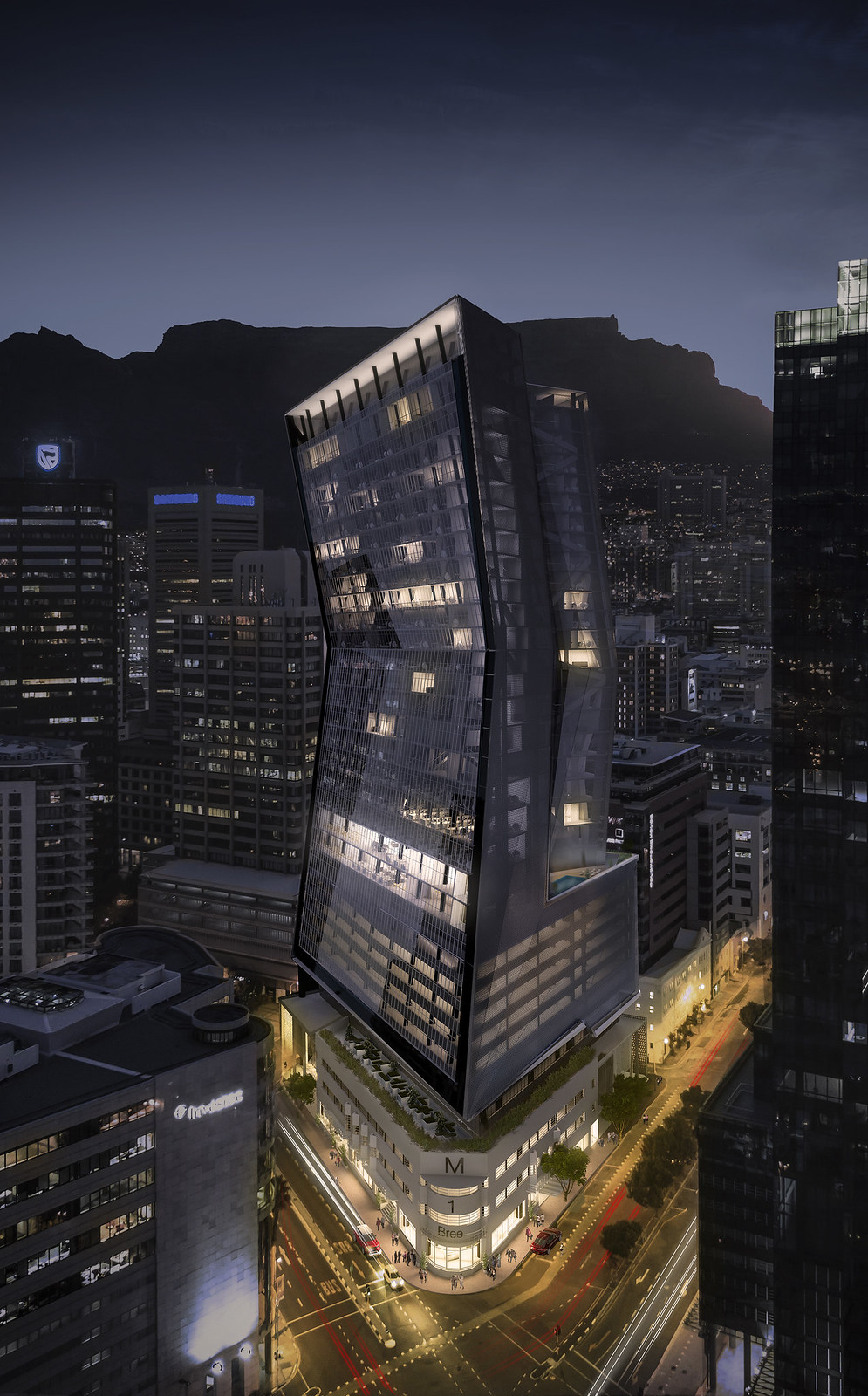
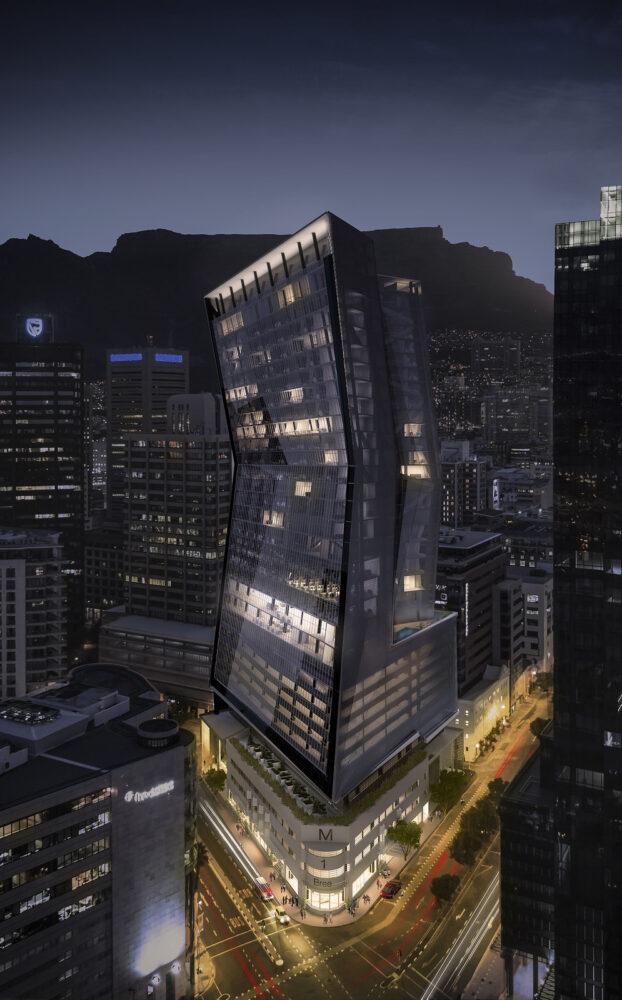
Top dollar: One on Bree is a 131m (430ft) mixed-use building under construction in Cape Town. Photo: Paragon Architects

Over the past year, I stood on construction sites before ground was broken, walked through malls on opening day, debated affordability and the housing crisis with experts, and watched entire towns change almost in real time.
When you put together the conversations, the data, the developments and the social media noise, a very clear picture of 2025 emerges.
It was not a boom year, but it was not a bust year either. It was a busy year for real estate. I like to think of it as the year real estate recalibrated.
Let’s start with the obvious. The Western Cape remained the most talked-about province in my inbox and on my feeds. From record-breaking mansion sales in Clifton to the V&A Waterfront’s land reclamation expansion, the development of the Cape Winelands Airport and the breaking ground of Cape Town’s second-tallest skyscraper with 270 residential apartments and 505 hotel rooms, Cape Town was undeniably cooking.
Beyond the city bowl and the Atlantic Seaboard – Paarl, Stellenbosch, Somerset West, and the broader Winelands continued their upward march, not because property suddenly became cheap or easy but because demand did not let up.
Semigration is no longer a buzzword. It is baked into pricing, planning and development pipelines. Lifestyle estates exploded, particularly those offering security, work-from-home infrastructure, nearby schools, and a sense of managed living. Tired but resilient South Africans are craving stability and predictability and that demand is reshaping where and how we build.
Cape Town itself remained constrained, with plenty of pressure on infrastructure and services that were already under too much pressure. Supply stayed tight, and land prices followed suit.
These pressures showed up in pricing and rentals, and increasingly in debates around affordability and inclusion. The City has land, with more than 50 properties expected to go to market early next year, yet affordable housing delivery still lags. The gap remains in execution at speed.
Projects such as the sale and development of the Good Hope Centre precinct signalled ambition, while conversations about the sale of the profitable CTICC exposed a deeper tension. Cities want growth but also need cash to maintain infrastructure and deliver services. Selling City-owned assets remains one of the most uncomfortable conversations in local government.
While the Western Cape hogged the headlines, Gauteng quietly got on with it. Data has shown renewed confidence, particularly in Tshwane and parts of Johannesburg. Bryanston, Rosebank, Midrand and nodes close to transport and mixed-use precincts performed better than many expected.
What stood out to me was how well smaller boutique, well-located projects with clear target markets sold. Investor appetite for high-quality residential projects in excellent locations remained strong.
And after years of waiting, we finally saw cranes return to Sandton. Olympus breaking ground was a genuine confidence boost for Johannesburg. Two towers, 529 residential units, retail and a five-star hotel component, developed by Tricolt in a joint venture with Growthpoint Properties. With over R1.2 billion in sales already achieved, it sent a clear message that Jozi is still very much in the game – and we love to see it.
Retail also had a strong year, particularly where it met real demand. We saw the opening of large regional centres like the 37,000m2 Jumbo Mall in Mpumalanga and the 60,000m2 Soshanguve Mall north of Pretoria. Over 100,000 people attended the latter grand opening alone.
Across the country, neighbourhood and convenience centres outperformed expectations, especially in underserved areas. Retail stopped trying to be aspirational and went back to being practical. Parking, access, tenant mix and pricing mattered more than fancy finishes.
Industrial property remained the quiet achiever of 2025. Logistics, warehousing and last-mile distribution continued to attract capital and vacancies have remained low, especially along key corridors in Gauteng, the Western Cape and KZN.
Durban, too, showed resilience that many had written off too quickly. Public-private partnerships have helped clean up the beachfront and revive hotels and retail, supported by further investment, including a planned R1 billion amusement park. Industrial nodes linked to ports and transport infrastructure continued to draw interest, even while broader confidence remained fragile.
The KZN North Coast is a space I am watching closely. Club Med’s first-ever South African resort is nearing completion ahead of its July 2026 opening, arguably one of the largest hospitality projects since Sun City. With extensive land parcels still available and plans like Zimbali’s proposed R50 billion Marina and residential estate, this coastline is brimming with potential. Consider this a hot property alert.
As for luxury property, she leaned hard into exclusivity. Luxury real estate in certain silos like the Val de Vie Lifestyle Estate in the Winelands and the classy Clifton continued to achieve record-breaking sales throughout the year and increased development.
What fascinated me this year was not the price tags but the economics. Many of these assets are passion projects rather than pure investments, trading liquidity for legacy. In a country grappling with affordability, they raise important questions about who property is really being built for.
And affordability refused to go away. Transfer duties, rising construction costs, interest rates, bond affordability and regulatory friction collided in the middle of the market.
First-time buyers felt it most. Many could afford the bond but not the upfront costs. The ladder into ownership has become steeper, not because people don’t want to buy, but because policy has not kept pace with reality.
We talk endlessly about stimulating the economy, yet property transactions remain burdened by costs that actively discourage movement. Until that changes, we will keep seeing people stuck between renting and owning.
Looking ahead at what 2026 will look like in South African real estate, I don’t expect fireworks. I expect more momentum.
Lifestyle-driven markets should continue to perform where infrastructure, governance and planning align. Industrial will remain solid, retail will stay selective, and office will continue its slow reinvention rather than a dramatic comeback.
Pressure will also mount on cities and policymakers to confront affordability more honestly. The real test will be whether talk finally turns into reform.
Most of all, I think property in 2026 will reward those who are realistic. Developments that solve real problems will outperform those that sell fantasy. Buyers will keep doing their homework and become more educated. The property purchaser is now more educated and has greater access to resources than ever before. This market will continue to remind us that property is not just about buildings, it’s about people, behaviour and long-term choices.
As I finish typing my last Ask Ash column for the year, I’m choosing cautious optimism. Not the blind kind but the kind grounded in what we actually saw in 2025. Real projects where we saw real cranes in the sky. This is the real proof that when cities function, property growth and investment follow.
Capital growth can only happen when we have functioning municipalities that are consistent in their promise and actions. Investment requires reliable, well-maintained infrastructure. Jobs (that we so desperately need) come from construction sites. And access to property will remain a privilege if bureaucracy and red tape continue to choke momentum.
2026 cannot be just another year of commentary; it needs to be a year of delivery. The real win is not higher prices or shinier developments; rather, it is cities that work and a property sector that opens the door wider, rather than pulling it shut.