4 years in the past, MLS Subsequent Professional carried out a pair of guidelines geared in the direction of eliminating time-wasting. Now, simply months forward of the 2026 World Cup, MLS’s experimentation is about to be adopted globally. The Worldwide Soccer Affiliation Board (Ifab), the game’s rule-making physique, is about to fulfill this weekend and is extensively anticipated to undertake each adjustments.
The primary of the 2, generally known as the timed substitution rule, forces a crew to play a person down for a minute if a participant takes longer than 10 seconds to depart the pitch. The second of the rules, dubbed the off-field remedy rule, removes a participant from the match for a minute in the event that they spend greater than 15 seconds on the bottom after an harm.
There are exceptions written into each guidelines – injured gamers and goalkeepers should not topic to the timed sub rule, for instance. There are a number of exceptions for the remedy rule as effectively, together with carve-outs for severe foul play, playing cards and head accidents.
The results of each guidelines after their 2022 implementation on the velocity of play in MLS Subsequent Professional, which serves as MLS’s developmental league, had been speedy and the foundations had been shortly integrated into MLS in 2024. The league added the adjustments to Leagues Cup, its annual competitors towards Mexico’s Liga MX, a 12 months later.
“The affect was in a single day,” stated Ali Curtis, the president of MLS Subsequent Professional who additionally serves as MLS’s govt vice-president of sporting improvement. “We noticed it in Subsequent Professional early on, when it was carried out in 2022 and we noticed it in a short time in MLS two years later. These guidelines have been working and we consider they’re good for the sport. We’re actually enthusiastic about [both rules].”
The rule adjustments had been staggeringly efficient in each leagues. In MLS, injury-related stoppages decreased by 72%, from a median of between 5 and 6 stoppages each match right down to 1.50 stoppages. The timed sub rule additionally made waves: in a complete of 4,346 substitutions over 510 matches in 2025, there have been solely 12 violations of the rule.
Curtis likes to indicate two separate clips of Inter Miami ahead Luis Suárez when demonstrating the timed substitution rule. Within the first clip, Miami are up a objective late within the match and Suárez – infamous for his gamesmanship – lollygags off the sector, leading to a timed substitute violation that compelled Miami to minimize a person for 60 seconds. Simply 4 days later, Suárez is once more subbed out of the match and is seen in nearly a full dash as he makes an attempt to depart the sector of play. The impact of the rule on Suárez was speedy.
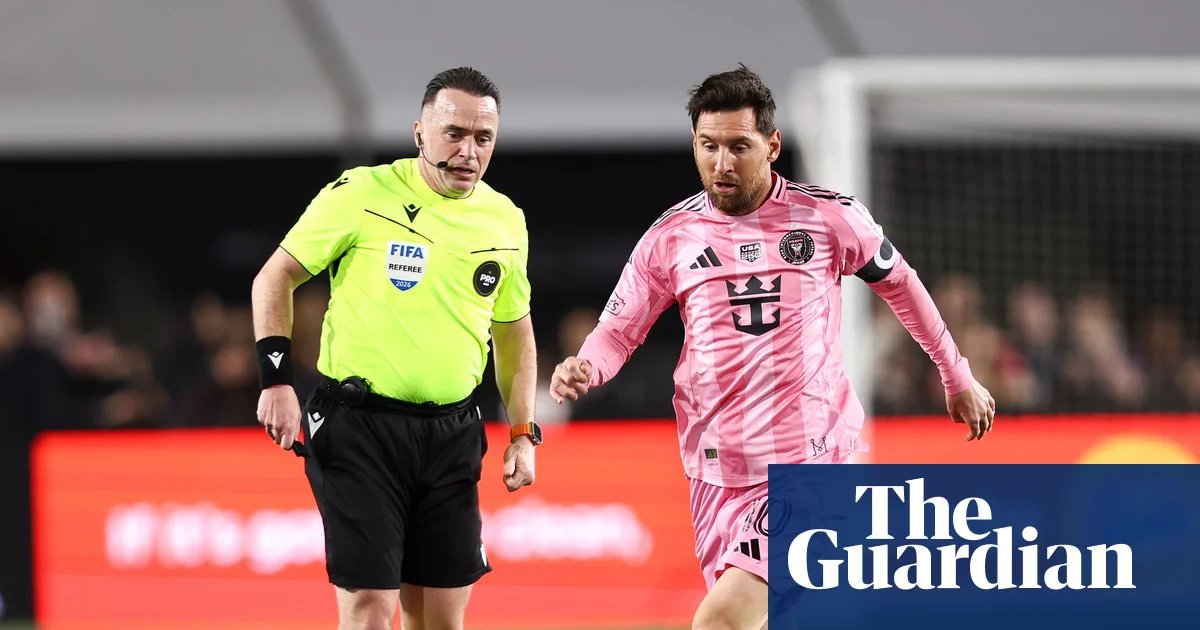
Suárez’s teammate, Lionel Messi, was concerned in probably the most high-profile implementation of both rule. In a 2024 match towards CF Montréal, Messi went down injured, clutching his knee. After he remained down for an prolonged interval, Messi – probably unaware of the rule – was faraway from the match for 2 minutes. Throughout his keep on the sideline, the Argentine was seen jawing on the fourth official, with fieldside microphones selecting up his commentary: “With some of these guidelines, we’re going nowhere.”
“In each season there are troublesome moments,” stated Curtis. “This sport is about emotion and all the pieces else that occurs all through the sport. These guys wish to win, and we love that. What I’d say is that we’re very considerate about implementing new guidelines. The north star was actually, ‘How are you going to discover a technique to evolve the sport whereas nonetheless sustaining the integrity of the game.’ And that’s a nice stability. Change is troublesome for people, and particularly troublesome within the second.”
The US has a protracted historical past of guidelines experimentation, with some concepts working higher than others. The American Soccer League of the Nineteen Twenties was the primary league globally to implement the usage of substitutes, doing so a full 30 years earlier than they had been adopted into the foundations of the sport and a half decade earlier than they had been carried out on the 1970 World Cup.
A model of the backpass rule, probably probably the most basic trendy change to the sport of soccer, originated not in European soccer however within the North American Soccer League, which tinkered with the thought simply earlier than folding in 1984. That very same league was additionally issuing pink playing cards for denial of a transparent goal-scoring alternative – what we now name “Dogso” – eight years earlier than Ifab adopted the rule in 1990. The NASL additionally pioneered the usage of names on the again of jerseys and numbers on the entrance of them lengthy earlier than it was the worldwide commonplace.
With the blessing of each Ifab and Fifa, the USA Interregional Soccer League (USISL) in 1995 turned a global take a look at mattress of kinds, trialing all kinds of weird rule adjustments. A few of these guidelines had been good (permitting the usage of kick-ins and punishing groups harshly for persistent infringement), others had been dangerous (settling video games by counting nook kicks), and others had been borderline ridiculous: the USISL employed a so-called “stampede kick”, a model of the 35-yard shootout that featured one lone participant streaking in on objective whereas being chased by each different outfield participant on the pitch.
The USISL additionally tried wider targets, generally by as a lot as 4 ft. MLS retained a couple of of these quirks when it debuted in 1996 – most notably the 35-yard shootout and a countdown clock that stopped working throughout breaks in play – however even these guidelines had been lambasted internationally and had been solid apart a couple of years later in favor of the worldwide norm.
America’s generally aggressive tweaks to the internationally acknowledged guidelines of the sport have often – and generally rightfully – rankled traditionalists and made many US concepts concerning the sport as an entire useless on arrival internationally. Curtis, nonetheless, feels that narrative has shifted.
“We didn’t invent the sport however we adore it and we’re captivated with it,” stated Curtis. “Whether or not or not there’s a stigma relating to Individuals shifting guidelines, I believe now we’re into our thirty first season. We’re related to the worldwide soccer neighborhood. Now we have considerate and significant conversations not simply inside our constructing and domestically however with our international companions. The conversations that we’ve had have been nice. We try to not concentrate on how we’re considered, we simply try to enhance and transfer ahead.”
The 2 MLS-led initiatives should not the one subject up for debate by Ifab this weekend. The board can also be contemplating changes to deal with time-wasting surrounding objective kicks and throw-ins, awarding a nook kick or reversing possession on a throw-in to penalize groups that take over a predetermined period of time to place the ball in play. There are also potential adjustments coming to VAR, which can now be used to reverse an incorrectly awarded nook kick or second yellow card.
Thanks for studying! Be a part of our neighborhood at Spectator Daily