No one might recommend that the Winter Olympics are missing in problem. Skiers zipping down the slopes and flying by way of the air. Skeletons hurtling round at greater than 100km/h. Ice skaters, metal-bladed, spinning, leaping and twisting. Slopestyle athletes pulling off essentially the most outrageous methods whereas touchdown the largest air. However everybody from leisure skiers to essentially the most excessive sports activities fans is aware of there may be at all times room for extra.
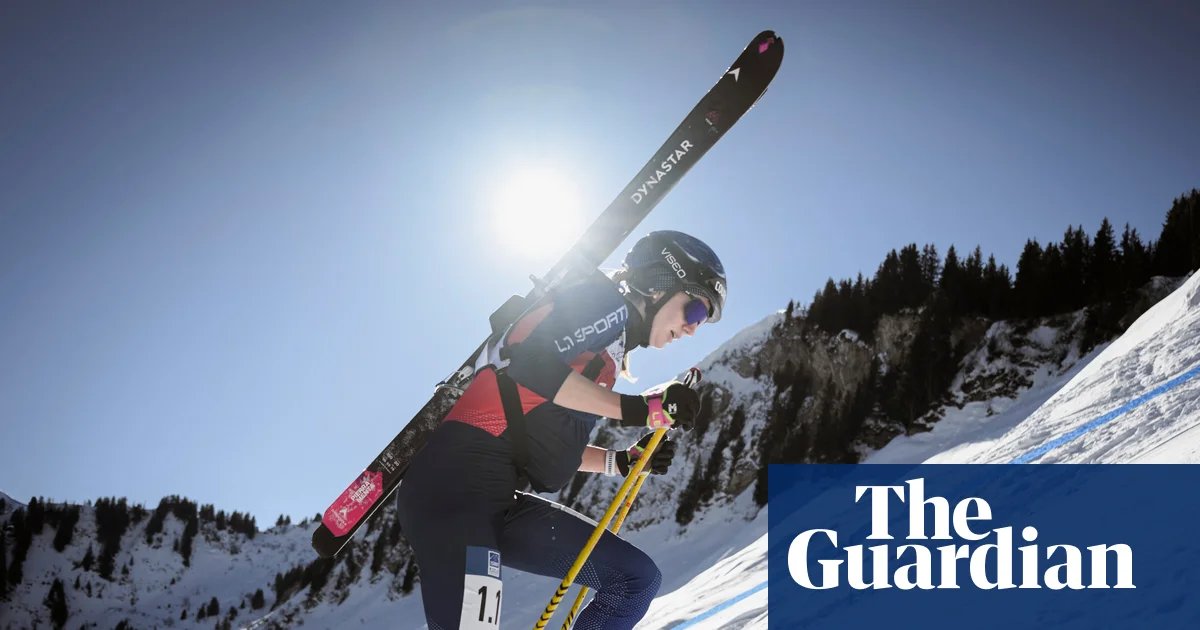
Enter the brand new child on the ice block at Milano Cortina 2026: ski mountaineering. The brand new problem? How about going up the mountain, mountaineering a bit, adopted by a speedy descent on the tiniest skis potential. Earlier than you ask, “why”? Forged your thoughts over the opposite disciplines on the schedule and do not forget that the reply is nearly at all times, “why not”?
Nevertheless, ski mountaineering – or skimo – in its conventional kind is completely about practicality. When snowboarding as a sport began to take off within the 1800s – that’s, nicely earlier than chairlifts existed – to traverse the slopes inevitably required uphill and downhill motion, in addition to navigating rocky mountain terrain and weaving by way of forests. Whereas individuals nonetheless try this – whether or not it’s ski touring or backcountry snowboarding – it doesn’t make for an simply digestible Olympics bundle. The game needed to be introduced into the trendy period. The Worldwide Ski Mountaineering Federation (ISMF) has created a model of the game prepared for commercialisation, accessibility and consumption – and subsequently, the Winter Olympics.
From 19 February, the northern Italian city of Bormio will host two skimo occasions. Dash and combined relay races on-piste will supply audiences a quick, enjoyable showcase of athletic potential – an intensified style of what the game has to supply. The director of the ISMF, Ramone Cooper, who has led the game’s evolution to its Olympic debut, says the variations between skimo and alpine or Nordic snowboarding come right down to tools used and the technical transitions between the three components of ascent, mountaineering (referred to as boot-packing) and descent.
“In comparison with downhill snowboarding, the place you’ve gotten the steadiness and power in a wider, heavier ski with robust bindings and robust boots, ski mountaineering is all about shifting by way of the mountains in actually light-weight tools,” Cooper says. “Within the dash occasions the transitions play a very important function as a result of it’s very troublesome to realize seconds within the descent and likewise within the ascent, however you possibly can simply lose seconds within the transition. So it’s turn into tactically actually essential to have very robust transitions as a result of there’s little or no margin for error.”
If ascending on skis appears like a sisyphean job, there’s a trick for that and it’s a singular function of the game. Skimo athletes use “skins”, that are skinny strips of grippy artificial materials, hooked up to the underside of their skis to supply traction on the snow. With the heel free from the binding on the ski, they’ll ascend at a blistering tempo, solely slowing to navigate across the “diamonds” on the course.
The primary transition is from skinning to boot-packing. This requires athletes shortly clicking out of their skis, stowing them on their again, and adjusting the levers on their boots to transform them from stiff ski-mode to versatile walk-mode. Of their tremendous light-weight boots they’ll hike and climb to the subsequent transition and swap again to skins by doing the reverse. Then, to transition from skinning to snowboarding for the descent, athletes unhook the skins on the finish of the skis, peel them off, stuff them in a pouch on their Lycra race fits, and set the ski bindings to lock within the heel.
Like different winter sports activities, skimo athletes are within the midst of a World Cup season, and French athletes Emily Harrop and Thibault Anselmet laid down a marker for the Olympics by profitable the boys’s and ladies’s sprints and the combined relay on the ultimate occasion. France, Spain, Italy and Switzerland have dominated the World Cup circuit up to now, and the native athletes will undoubtedly obtain a lift from the house crowd in Bormio.
It’s only the start for this model of the game, which is able to virtually inevitably take over from the longer, extra conventional skimo disciplines attributable to local weather change. Lowered snow is already altering the way in which the ISMF design the calendar. Nevertheless, the game requires little or no infrastructure, which supplies it extra flexibility.
“We have now occasions that begin off snow,” Cooper says. “Among the distance occasions begin in villages and you’ve got athletes which can be then ascending [on boots] till they attain the snow line. The dash and combined relay in an effort to have that reliability have been run inside resort areas the place there may be snowmaking. That’s a comparatively new idea as nicely that we’re internet hosting these occasions inside synthetic snow areas. However that’s the actuality of how the snow is now.”
Ski mountaineers aren’t any strangers to the local weather battle – many having spent their complete lives traversing mountains and glaciers, bearing nearer witness to the rising snowline and shrinking ice than most. After Milano Cortina the ISMF shall be confronted with the unenviable problem of pushing for its sport’s enlargement at French Alps 2030 – the place the longer distance occasions would actually shine – whereas unchecked world heating transforms the alpine surroundings increasingly more every year.
Thanks for studying! Be part of our neighborhood at Spectator Daily